Optimized power distribution
A structured energy supply helps to distribute loads in a comprehensible manner and to operate the infrastructure in a planned manner.
Efficient infrastructure, conscious use of energy and responsible operation for modern Colocation, cloud and hosting environments.
Data centers are a central part of the digital infrastructure. At the same time, servers, networks, storage solutions and cooling systems require constant energy. Therefore, responsible use of resources is not a side issue for PRIME DataCenter, but an important part of technical planning and ongoing operations.
Our goal is to provide high-performance IT infrastructure and use energy, cooling, hardware and space as efficiently as possible. Instead of blanket sustainability promises, we rely on comprehensible measures, technical optimization and an infrastructure that can be operated economically and resource-savingly in the long term.
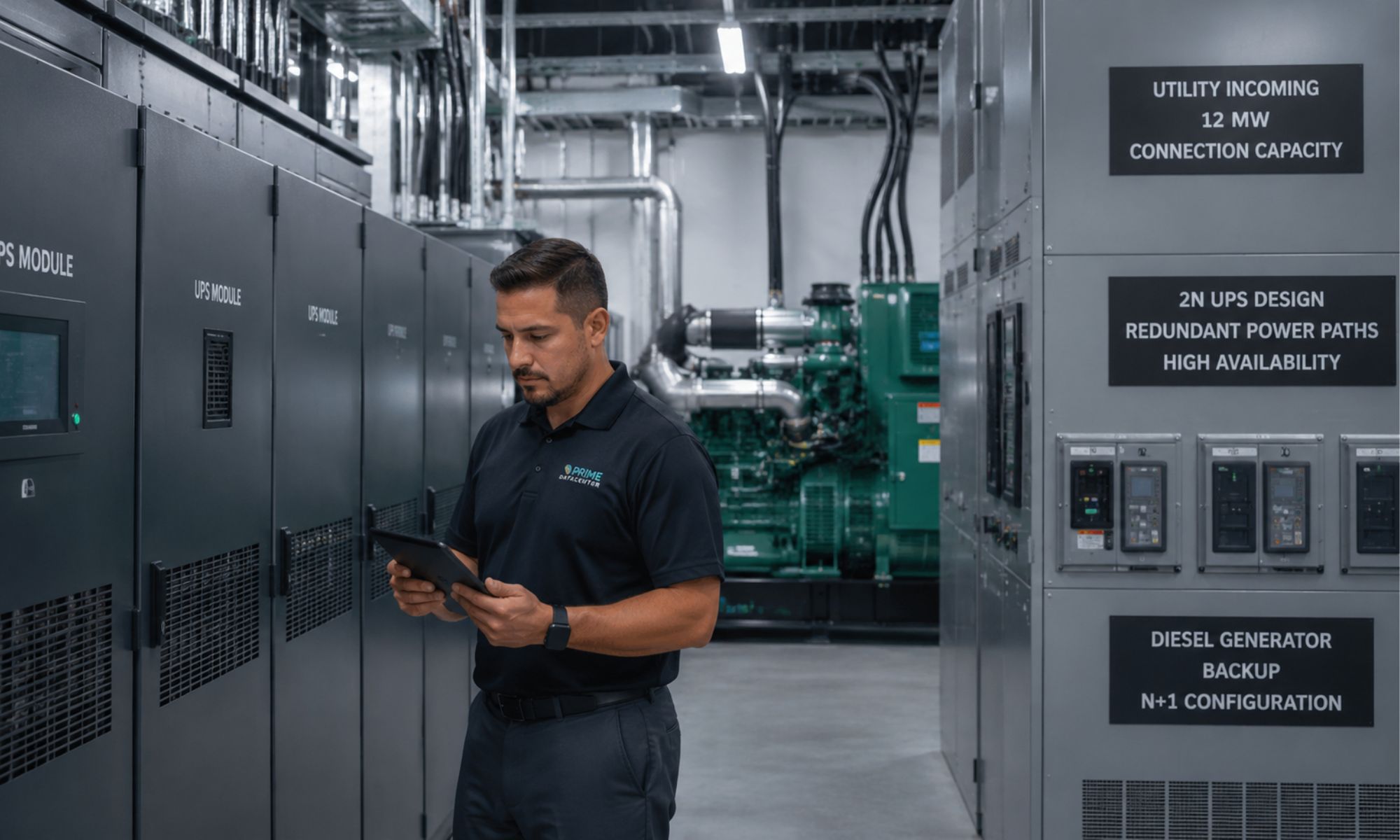
Sustainability in the data center doesn't just mean the question of where energy comes from. What is also crucial is how efficiently this energy is used. This includes well-thought-out technical planning, a stable power supply, efficient cooling, clean use of space and the ability to scale IT resources as needed.
For companies, running their own server rooms can quickly become inefficient. Cooling, power supply, fire protection, security and redundancy are often not optimally coordinated. A professional data center can help to operate IT infrastructure under controlled conditions and to pool resources.
PRIME DataCenter therefore sees sustainability as the interplay of energy efficiency, operational reliability, scalability and long-term usability of the infrastructure.
A data center must provide energy reliably. At the same time, this energy must be used as efficiently as possible.
A structured energy supply helps to distribute loads in a comprehensible manner and to operate the infrastructure in a planned manner.
Cooling concepts are crucial for the energy consumption of a data center. The aim is to reliably control the temperature of systems without wasting energy unnecessarily.
Through monitoring and capacity planning, resources can be used more specifically and bottlenecks can be identified at an early stage.
Instead of permanently over-sizing the infrastructure, areas, Racks and resources can be expanded as needed.
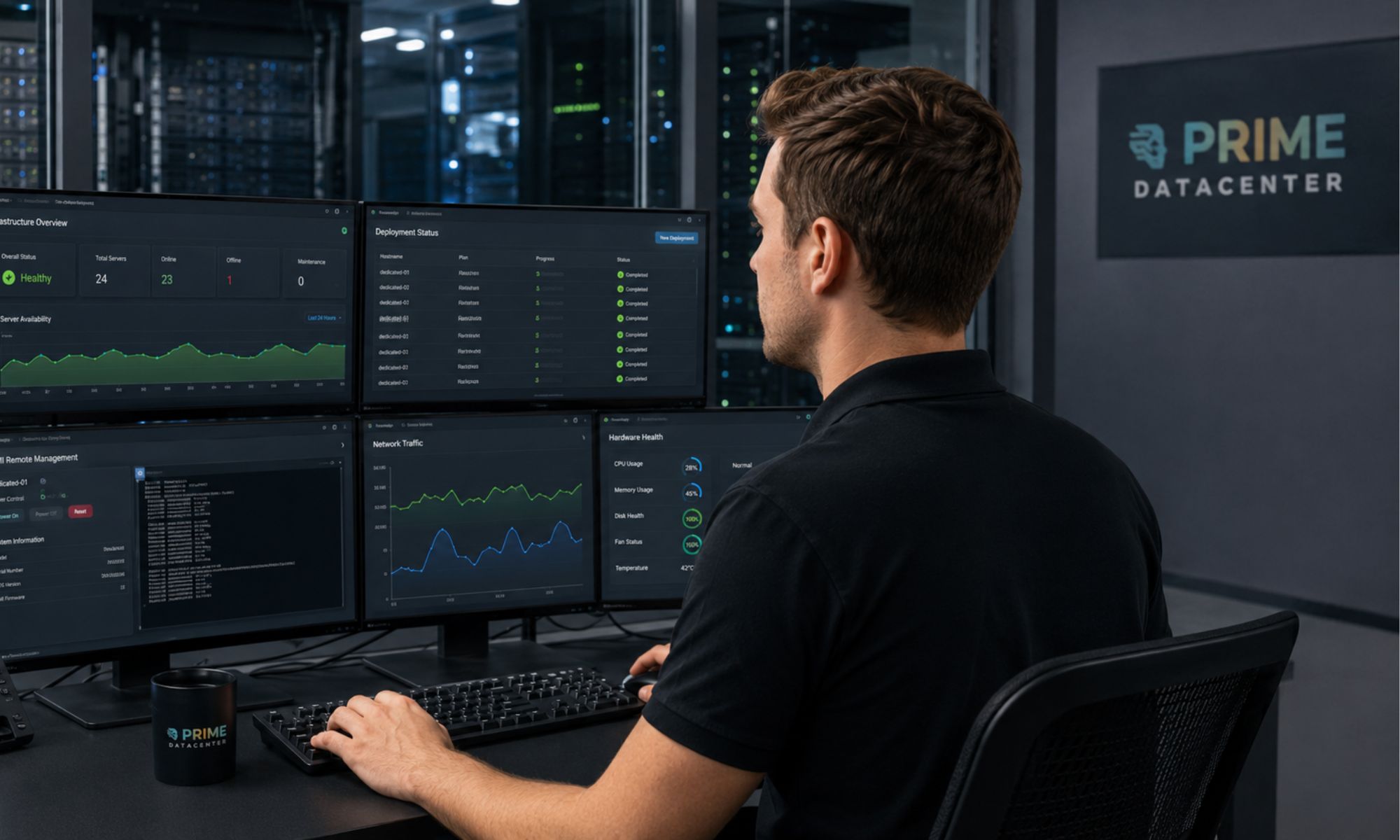
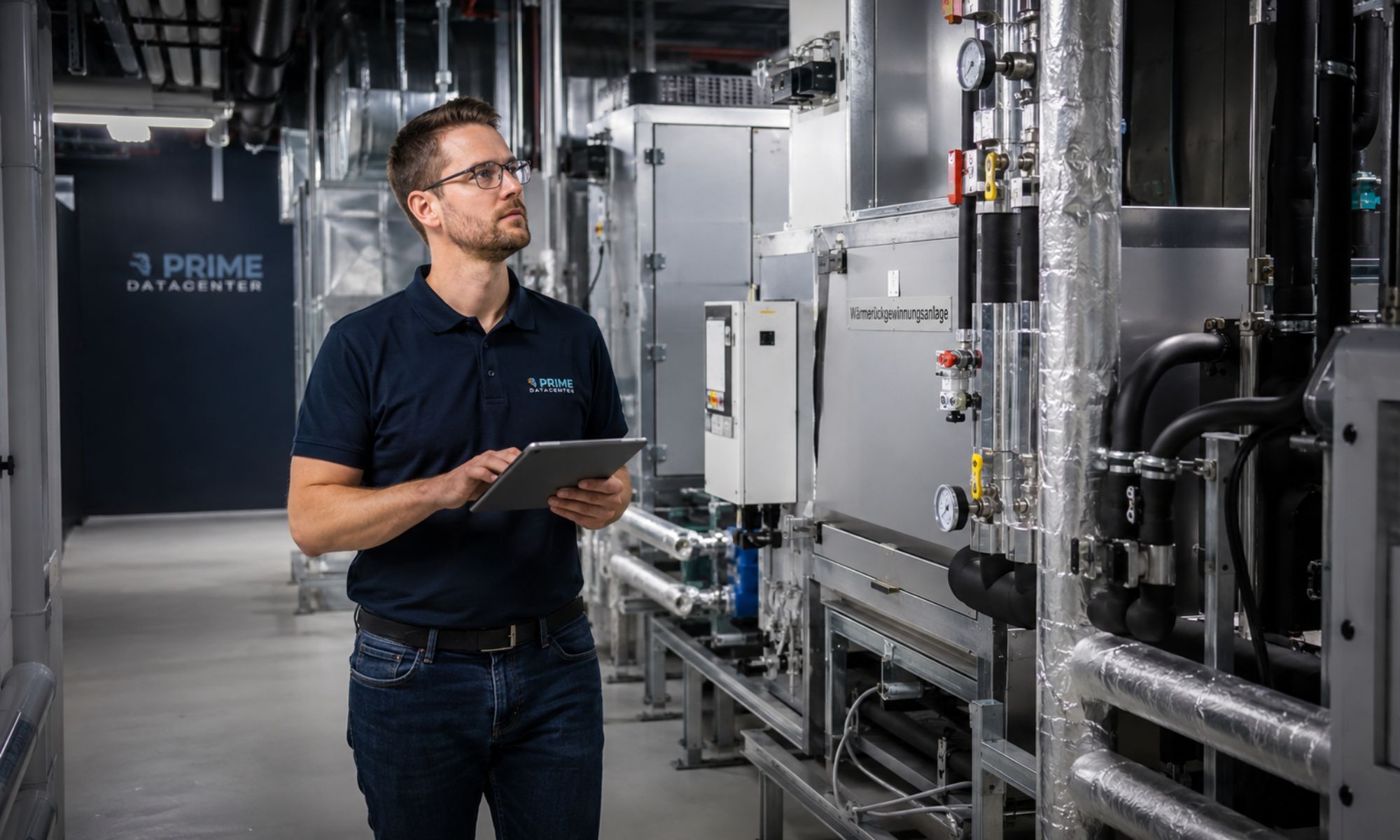
Colocation can help companies operate their own hardware in a professional environment instead of building their own technical infrastructure for each location.
Many companies operate their own server rooms, although these are often inefficient in the long term. Individual server rooms require power, cooling, security measures, maintenance and emergency concepts. At the same time, they are often not optimally utilized or can only be technically scaled with great effort.
Colocation can be a useful alternative here. Companies continue to operate their own hardware themselves, but use the professional environment of a data center. This means that energy supply, cooling, physical security and infrastructure are not set up separately for each individual company location, but are provided centrally.
| Area | Own server room | Colocation in the data center |
|---|---|---|
| Power supply | Must be built individually | Professional electricity infrastructure available |
| cooling | Often small and inefficient | Designed for long-term IT operation |
| Scaling | Expansion is often complex | Additional Racks or areas can be planned |
| Security | Depending on location | Professional access and security concepts possible |
| maintenance | Internal responsibility | Operation in a specialized environment |
| Resource usage | Often undersized or oversized | Better bundling of infrastructure possible |
Sustainable IT infrastructure is not created through maximum equipment, but through appropriate dimensions.
Infrastructure is planned according to actual needs and can be expanded later.
Companies do not have to build up large reserves right from the start that permanently tie up energy and space.
Racks, network, Storage and cloud resources can be adjusted depending on growth.
Efficient use of resources not only reduces technical complexity, but also supports predictable operating costs.
Energy consumption in the data center is not only an ecological but also an economic question. Power, cooling, redundancy, operation and maintenance significantly influence the running costs of an IT infrastructure.
Companies that operate their infrastructure in a professional data center can benefit from more predictable operating conditions. Instead of operating your own server rooms with separate power, climate and security concepts, the infrastructure is bundled in an environment that is designed for precisely this purpose.
This can help reduce technical risks, reduce internal costs and make ongoing IT costs more transparent.
Sustainability in IT operations does not just depend on electricity consumption. Hardware lifespan, maintainability and sensible expandability also play an important role.
A professional data center creates stable environmental conditions for servers, Storage and network components. This includes controlled temperature ranges, structured cabling, predictable power supply and traceable operating processes.
This allows companies to plan their infrastructure more long-term and avoid having to replace systems earlier due to unsuitable operating conditions.
A controlled data center environment can support the operational reliability and durability of hardware.
Clear Rack structures, clean cabling and documented processes make maintenance and expansion easier.
Hardware can be specifically renewed or expanded instead of having to be replaced under time pressure.
Operating in a data center reduces the dependency on improvised server rooms at the company location.
Not every application requires the same infrastructure. The aim is not to move every application in a certain direction, but rather to plan infrastructure sensibly.
For companies that want to continue using their own hardware and require professional data center conditions.
For larger or safety-critical infrastructures that also need to be operated physically separately.
For flexible resources, scalable applications and dynamic workloads.
For companies that want to outsource technical operational tasks and have their systems professionally looked after.
For combinations of your own hardware, cloud resources, Backup systems and individual network connections.
Sustainability is important, but should not be reduced to superficial statements. PRIME DataCenter therefore relies on factual communication.
We only communicate what can be proven technically and organizationally.
Energy efficiency and resource use are understood as an ongoing process.
Where appropriate, key figures such as utilization, energy consumption, availability or efficiency values can be included.
Companies receive support in choosing an infrastructure that makes sense technically, economically and in terms of resources.
Sustainability in the data center cannot be determined by a single value. Different key figures help to better classify energy use, infrastructure quality and operational stability.
| Key figure | Meaning | status |
|---|---|---|
| PUE – Power Usage Effectiveness | Describes the relationship between total energy used and energy used directly for IT systems. | Value is checked on a project-by-project basis |
| Infrastructure utilization | Helps to avoid electricity, space and hardware being permanently unused. | Monitoring under construction |
| Uptime and availability | Shows that infrastructure is operating stably. Sustainability must not come at the expense of operational safety. | Evaluable per performance |
| Cooling performance and temperature management | Efficient cooling is one of the most important levers for energy efficiency in the data center. | Project-related assessment |
| Hardware lifespan | Durable hardware reduces resource consumption and avoids unnecessary replacement. | Depends on systems and operations |
| Backup and recovery concepts | Sustainable operation also means planning systems to be resilient and recoverable. | Can be planned according to requirements |
For customers, energy- and resource-conscious data center operations not only mean a better sustainability profile. It also affects the cost structure, scalability, risk management and future viability of IT.
Electricity, cooling, Rack areas and infrastructure can be planned more professionally.
Companies do not have to set up their own data center environment and operate it permanently.
Infrastructure, availability and performance values can be better monitored and documented.
Resources can grow without constantly creating new technical limits at the company location.
An efficient infrastructure creates a better basis for digitalization, growth and new applications.
Data centers require constant energy for servers, storage, networks, cooling and security systems. The more efficiently this energy is used, the better it is to control operating costs, resource consumption and technical loads.
Colocation can be more sustainable if infrastructure is bundled, utilized better and operated more professionally. However, the specific design, energy supply, cooling, utilization and operating processes are crucial.
PUE stands for Power Usage Effectiveness. The value shows how efficiently a data center uses energy. It compares the total energy used to the energy used directly for IT systems.
Depending on the project and technical implementation, relevant values can be checked or provided. It is important that key figures are only communicated if they are reliable and understandable.
Cooling is one of the most important factors in data center operations. Efficient cooling protects hardware, supports stable operating conditions and can significantly influence energy use.
Cloud Hosting can make resources more efficient to use because capacities can be provided and adjusted more flexibly. Whether cloud, Colocation or hybrid infrastructure makes more sense depends on the workload in question.
Sustainable, credible communication requires evidence. PRIME DataCenter should only make statements that can be proven technically, organizationally and documented. This creates more trust than general advertising promises.
Would you like to operate your servers, applications or hosting infrastructure professionally while keeping a better eye on energy, costs and resources? PRIME DataCenter supports you in planning a suitable data center, Colocation or cloud solution.
Together we will check which infrastructure suits your technical requirements, your growth and your sustainability goals.
Request advice Plan Colocation solution